

The Friendly Guide to Choosing the Right Rifle Ammo for Your Gun
Hitting a target at distance feels impossible when your shots drop or drift, and that’s exactly the problem rifle ammo 6.5×55 Swedish Ammo for Sale solves by delivering a stable, high-velocity projectile. Each round combines a precisely weighed bullet, a carefully measured powder charge, and a primer that ignites it all, creating consistent pressure that sends the bullet down the barrel with predictable spin. That spin gives you flat trajectories and tight groupings, so you can trust your shot from 100 yards out to 600 and beyond, whether you’re plinking steel or filling a freezer.
Understanding the Core Components of a Centerfire Cartridge
The heart of any rifle cartridge is its primer, a small cup in the center of the case head that ignites the powder charge when struck by the firing pin. Around that sits the case, usually brass, which holds everything together and expands to seal the chamber upon firing—that’s what makes it “centerfire” versus a rimfire design. Inside, the propellant burns rapidly to build pressure, and the bullet, seated at the case mouth, is the projectile that travels down the barrel. Understanding how these parts work together helps you troubleshoot feeding issues or pressure signs. For example, a flattened primer or sticky bolt lift points to too-hot a load, not just a dirty gun. Your choice of bullet weight and case length matters more for accuracy than you might think at first. Always match your reloading data to the specific case and primer you’re using—mixing components without checking specs is how things go wrong fast.
How Bullet Weight and Grain Affect Your Shot Placement
Bullet weight, measured in grains, directly dictates trajectory and impact point through its influence on velocity and wind drift. A lighter grain bullet exits faster, creating a flatter mid-range arc, but it sheds speed quicker, dropping steeply beyond 300 yards. Heavier grains retain momentum, resisting wind deflection and maintaining energy at distance, yet their slower start demands more holdover at close range. Your shot placement shifts accordingly: lighter loads impact higher at close-to-mid distances, while heavier loads group lower until their retained velocity takes over. Match the grain .338 Lapua Ammo for Sale to your target size and range—a 55-grain varmint round hits differently than a 77-grain match bullet at 400 meters. The grain range you choose physically moves your point of impact, so verify zero with the exact load you hunt with.
- Lighter grains (40–55) produce a flatter 100-yard zero but drop rapidly past 250 yards.
- Heavier grains (62–77+) require a higher holdover under 150 yards but stabilize better in crosswinds beyond 300.
- Switching grain weight without re-zeroing shifts impact by 1–3 inches at 200 yards, depending on barrel twist rate.
- Long-range shot placement depends on ballistic coefficient—a heavier, sleeker bullet retains velocity longer, reducing drop at 500+ yards.

The Role of Case Material and Primer Type in Reliable Ignition
The foundation of reliable ignition in rifle ammo rests squarely on how case material and primer type interact under firing stress. Brass cases, with their spring-back resilience and heat resistance, maintain a consistent primer pocket tension across multiple firings, preventing gas blow-by that causes misfires. Steel or aluminum cases, being stiffer and less ductile, can deform around the primer, loosening seal integrity over time. Primer choice matters equally: large rifle magnum primers deliver a hotter, longer-lasting flame for ball powders, while standard large rifle primers suit extruded powders that ignite easily. *Never assume a primer’s compatibility without verifying it against your case’s wall thickness and powder burn rate.* A soft primer cup in a hard case risks piercing, while a hard cup in a thin case risks light strikes. Match primer type to case material—brass rewards standard primers, but steel cases often demand slightly harder cups to avoid premature ignition from rough chamber handling.
Decoding Calibers: Matching the Right Round to Your Rifle’s Purpose
Matching the right round to your rifle’s purpose starts with understanding the ballistic job at hand. For short-range varmint control, a flat-shooting .223 Remington with light, frangible bullets minimizes pelt damage and ricochet risk. Conversely, a heavy-for-caliber .308 Win or 6.5 Creedmoor round excels for medium-to-large game, delivering the sectional density and retained energy needed for ethical, deep-penetrating shots at 300+ yards. Long-range precision demands a high-BC bullet, like a 140-grain 6.5mm, which bucks wind drift better than a lighter .243 load. Always verify your barrel twist rate, as it dictates the stabilizing projectile weight range. Ignore marketing hype; your rifle’s action length, magazine constraints, and recoil tolerance are the true filters. Ultimately, caliber selection hinges on mission-specific ballistics, so test different bullet weights to confirm zero and group consistency before relying on any rifle ammo for field Ammunition for Sale use.
Short-Action vs. Long-Action Rounds: What Your Bolt Throw Tells You

Your rifle’s bolt throw physically dictates cartridge length, separating **short-action vs. long-action rounds** into two distinct operating envelopes. Short actions (like .308 Win or 6.5 Creedmoor) cycle a bolt that travels roughly 2.8 inches, feeding cases under 2.8 inches overall—keeping the receiver compact and the stroke fast. Long actions (like .30-06 or 7mm Rem Mag) need a 3.34-inch magazine, forcing a longer throw that slows follow-up shots but allows heavier, higher-capacity rounds. If your bolt stutters or binds on a cartridge, you’ve crossed the length limit—forcing either a custom magazine or a receiver swap. A slick bolt throw on the wrong action length still won’t chamber a round that exceeds your mag box.
Q: How do I know if my rifle is short- or long-action by feel?
A: Cycle a dummy round. If the bolt handle arcs less than 90 degrees and the round drops in freely, it’s short-action; if the throw feels stretched and the case touches the front of the mag, you need a long-action receiver.
Popular Hunting Loads vs. Precision Target Rounds: Key Differences
Hunting loads prioritize terminal effect and reliable expansion at varied ranges, often using soft-point or bonded bullets that upset violently in tissue. This design typically trades raw accuracy for consistent weight retention, with many factory loads grouping 1.5–2 MOA—adequate for vital zones. Precision target rounds, conversely, demand sub-MOA consistency for long-range ballistics, employing boat-tail hollow-points with tight jacket tolerances and concentricity. These bullets resist wind drift and maintain transonic stability, but they may fragment on bone or fail to expand on light game. For sequence:
- Choose hunting loads for ethical, energy-dumping impacts inside 300 yards.
- Select target rounds for benchrest or competition, prioritizing uniform muzzle velocity over blunt-force trauma.
- Reserve hybrid loads (e.g., monolithic copper) only when your rifle’s twist rate matches both tasks.
Ballistic Tips, Soft Points, and Full Metal Jackets: Choosing a Projectile Design
For rifle ammo, the projectile design dictates terminal behavior more than any other variable. Ballistic tips marry a polymer spire point to a jacketed lead core, yielding a flat trajectory and violent, rapid expansion upon impact, making them ideal for varmints and thin-skinned game where hydrostatic shock is desired. Soft points offer a more controlled expansion, with the exposed lead tip mushrooming reliably at moderate velocities, providing deeper penetration for larger game like deer or elk in brushy environments. Full metal jackets are the opposite: their solid construction prevents expansion entirely, guaranteeing deep, straight-line penetration and minimal tissue disruption, which suits target practice or hunting where over-penetration and meat damage are primary concerns. Your barrel twist and velocity range will ultimately dictate whether a lighter ballistic tip or a heavier soft point stabilizes effectively, so match the projectile to your specific rifle’s harmonics. For defensive or dangerous-game loads, bonded soft points or monolithic solids outperform fragile tips by retaining weight through bone and muscle.
Expansion Characteristics for Whitetail vs. Paper Targets
Understanding expansion characteristics for whitetail vs. paper targets dictates your projectile choice, as the two demand opposite behaviors. On a whitetail, a ballistic tip or soft point must rapidly mushroom, dumping energy into vital tissue to create a devastating wound channel—ideally, the bullet retains 60-70% of its weight while expanding to 1.5 times its original diameter. Paper targets, however, require minimal, predictable expansion to cut a clean, measurably crisp hole. Here, a full metal jacket’s non-expanding, flat-nose profile punches a consistent caliber-sized circle, preventing the torn, ragged edges that obscure scoring. The sequence for hunters: first, prioritize deep penetration and controlled expansion for a humane kill; second, accept that same round will shred paper; third, switch to FMJs for any practice where shot-calling, not terminal performance, is the goal.
Boat-Tail vs. Flat-Base Bullets: Which Gives You Flatter Trajectory
For a flatter trajectory at extended ranges, boat-tail bullets are the clear choice over flat-base designs. The tapered rear of a boat-tail reduces base drag, the primary force slowing a projectile once it passes the transonic zone. This aerodynamic efficiency preserves velocity better, meaning less drop at 300 yards and beyond. Flat-base bullets, while excellent for short-range hunting because they stabilize quickly in slower-twist barrels, shed speed rapidly past 200 yards, forcing you to hold over aggressively. If your shots stay inside 250 yards, flat-base rounds are simple and effective; but for consistent, predictable mid-to-long-range hits, the boat-tail’s superior ballistic coefficient delivers a noticeably flatter path with fewer corrections.
Reading the Box: Interpreting Velocity, Energy, and Ballistic Coefficient Data
The box on your rifle ammo isn’t just packaging—it’s a cheat sheet for field performance. Velocity, listed in feet per second (fps), tells you how flat your trajectory will be; a faster round means less holdover at range. Energy, in foot-pounds, shows terminal punch, which helps you match ammo to game size or steel targets. The ballistic coefficient (BC) is the real gem—it measures how efficiently the bullet slices through air. A higher BC retains velocity and resists wind drift better, which matters more than muzzle speed for long-range shots. Cross-reference these numbers with your barrel length, since shorter tubes can drop velocity 50–100 fps versus the box’s test barrel. Use the BC to calculate your own drop chart instead of trusting the box’s example trajectory—your scope height and altitude change everything.
Why Muzzle Velocity Alone Doesn’t Predict Downrange Performance
Muzzle velocity is only the opening argument in a bullet’s ballistic story. A screaming-fast load can shed speed dramatically if its ballistic coefficient is poor, while a slower, sleeker projectile retains energy and resists wind drift far better at 300 yards. Gravity pulls on everything equally, but air drag punishes low-BC shapes, flattening trajectories and bleeding momentum. A light, fast varmint bullet may start at 3,900 fps yet arrive at 400 yards with less punch than a heavy, high-BC match bullet launched 700 fps slower. Wind deflection compounds this: high velocity gives less flight time close range, but downrange, retained velocity—dictated by BC—governs drop and impact. Read BC and velocity together, or your zero will lie to you beyond 100 yards.
Calculating Recoil Impulse Based on Powder Charge and Bullet Mass
To calculate recoil impulse from propellant and projectile data, sum the momentum of the bullet and the ejected powder gases. Multiply bullet mass (in grains) by muzzle velocity (fps), then divide by 225,218 to get bullet momentum. For gas momentum, use 1.5 to 6.8 SPC Ammo for Sale 2 times the powder charge weight (grains) as the effective gas mass—because escaping gases exit faster than the bullet—and multiply by a gas velocity typically 4,000–5,000 fps. Add both results for total impulse (lb·s). A heavier charge increases impulse disproportionately; the table below shows two loads with identical bullet mass but differing powder weights.
| Bullet (gr) | Charge (gr) | Muzzle .32 ACP Ammo for Sale (fps) | Impulse (lb·s) |
|---|---|---|---|
| 150 | 42 | 2,900 | 3.02 |
| 150 | 48 | 3,100 | 3.39 |
Storage and Handling Practices That Preserve Accuracy and Shelf Life
To keep your rifle ammo shooting tight and lasting for decades, focus on **proper storage conditions** above all else. Store boxes upright in a sealed ammo can with silica gel packs to fight humidity, as moisture is the main enemy of both primers and powder. Keep that can in a cool, dark closet or basement, avoiding attic heat swings that degrade propellant over time. When handling rounds for the range, avoid touching the projectile with oily fingers, since skin oils attract dirt and can affect seating friction. Always inspect cartridges for dents, corrosion, or loose bullets before loading, and never force rounds into a tight magazine. Rotating your stash by using the oldest boxes first ensures consistent accuracy and maximizes **shelf life preservation**. Simple habits like these keep your ammo boringly reliable when it counts.
Safe Temperature Ranges and How Humidity Corrodes Primers
Keep rifle ammo between 40°F and 80°F. Extreme heat accelerates propellant degradation, raising pressure unpredictably, while repeated freezing can cause condensation inside the case. **Humidity is the true enemy of primers**: moisture migrates through the case neck and flash hole, reacting with the lead styphnate to form non-igniting salts. Once relative humidity exceeds 50%, corrosion begins within weeks, pitting the primer cup and weakening the anvil. Store with desiccant packs and check for greenish-white residue on primers monthly. Stable temps below 70°F with humidity under 30% preserve primer sensitivity for decades.
Q: Can humidity damage primers even inside sealed ammo cans? Yes—unless the gasket is perfect and silica gel is https://specialtysportsandsupplyltd.com/ fresh, ambient moisture seeps in, corroding primers silently from the outside in.
Rotating Your Stockpile: Signs of Powder Deterioration
Rotating your stockpile means shooting the oldest rifle ammo first, so nothing sits too long. But even with rotation, powder deterioration signs can appear in older rounds. Check for a harsh, acidic smell when you crack a box—that’s a red flag. Visually, look for reddish dust or rust-colored streaks on the brass near the primer or neck; this often means the powder’s breaking down. Also, if you notice inconsistent muzzle velocities or more unburned powder flakes in your action after firing, the propellant is losing its punch. Toss any rounds showing these issues rather than risking a squib or pressure spike.
Rotate shrewdly and sniff every box; acid smell, rust dust, or erratic velocities mean the powder’s gone bad.
Zeroing and Testing: A Practical Method to Verify Your Ammo’s Consistency
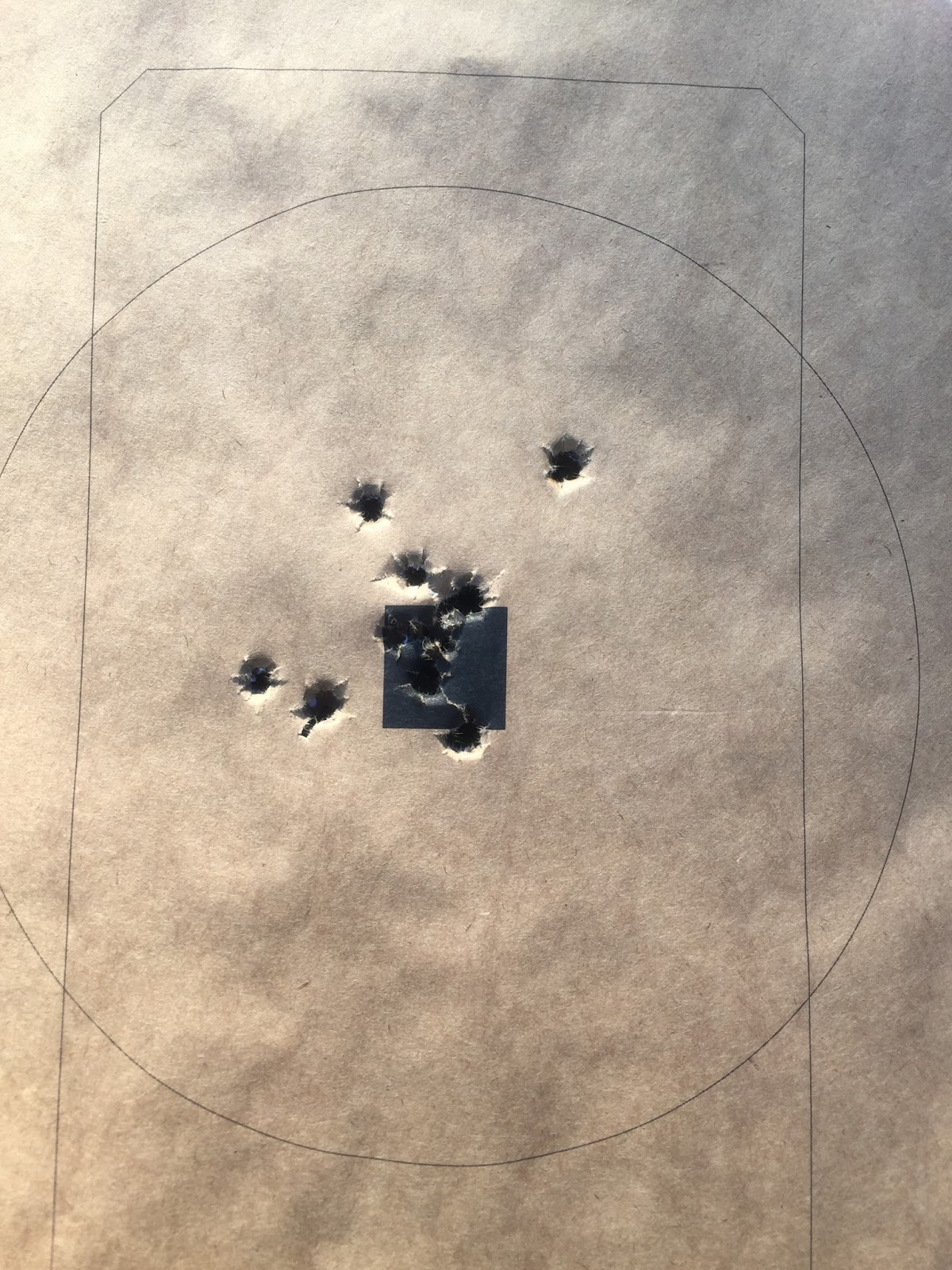
To verify your rifle ammo’s consistency, zero your optic at a fixed distance—typically 100 yards—using a rock-solid rest, then fire three separate five-shot groups with the same lot. Record each group’s center-to-center spread; if your ammo is consistent, those centers will cluster within half an inch of one another, while the groups themselves stay under one MOA. Do not adjust your scope between groups—any shift in point of impact reveals velocity or projectile inconsistencies, not shooter error. After confirming the zero, shoot a cold-bore shot at a fresh target to see where your first round lands, since that matters most for hunting or duty use. Repeat this exact process at 200 and 300 yards to expose trajectory drift caused by batch variation. If your groups tighten but the zero .32 Win Special Ammo for Sale shifts dramatically with temperature or elevation changes, your ammo lacks thermal stability—a critical flaw. Only by testing multiple lots side-by-side can you truly distinguish a rifle that shoots well from a load that performs predictably every time. Track every result in a log, then commit to the lot that holds the tightest vertical string, because that consistency—not raw accuracy—is what turns a good rifle into a reliable tool.
Shooting Three-Shot Groups to Confirm Optimal Node
Once your ladder test identifies a flat spot in velocity, lock in that optimal node by firing three-shot groups at the specific charge weights bracketing it. Shoot one group per charge, letting the barrel cool completely between strings, and measure center-to-center spread. A node that’s truly stable will produce tight, overlapping groups across two or three adjacent charges; if 6.5x57mm Mauser Ammo for Sale only one charge shoots well, the node is narrower than expected. Compare group diameters—not just averages—because a single flyer can skew data. Use the tightest three-shot group as your final load, then confirm it again on a different day to rule out environmental fluke.
Three-shot groups confirm a node’s real-world precision, separating true charge-window stability from a lucky single string.
Adjusting Your Scope for Point of Impact Shifts Between Lot Numbers
When a new lot number of the same rifle ammo shifts your point of impact, adjusting your scope for lot-to-lot variances requires a fresh zeroing session rather than assuming identical ballistics. Start by firing a three-shot group 6.5x57R Ammo for Sale at your primary zero distance, then note the vertical and horizontal deviation from your previous zero. Use your scope’s turret adjustments—typically 0.1 or 0.25 MOA per click—to move the reticle toward the new group’s center, but re-confirm with another group to avoid chasing fliers. Because lot shifts are rarely uniform across all distances, re-check your adjusted zero at 100 yards before trusting it at extended ranges. This process should be repeated each time you open a new case, as velocity and bullet seating variations alter trajectory even with identical box labels.
- Record the exact click values needed to re-zero so you can quickly return to a previous lot’s settings if you switch back.
- Use a stable rest and cold bore for the initial three-shot group to isolate the ammo’s shift from shooter error.
- Verify the adjusted zero at both 100 and 200 yards, since the shift may be .35 Remington Ammo for Sale non-linear due to differing muzzle velocities.